


Seomyeon is one of Busan’s busiest districts, and two very different places sit close to it: a working market that has been trading since the years after the Korean War, and a street of small cafes that used to sell tools. This guide puts them side by side as one easy half-morning in Busanjin-gu: the market first, then coffee.
Every fact below comes from a named source, and we say when we checked it. Where we could not confirm something, or where the sources disagree, we say so instead of smoothing it over. The market-food section is the thinnest part, and we explain why.
Where to Go: Two Different Kinds of Morning
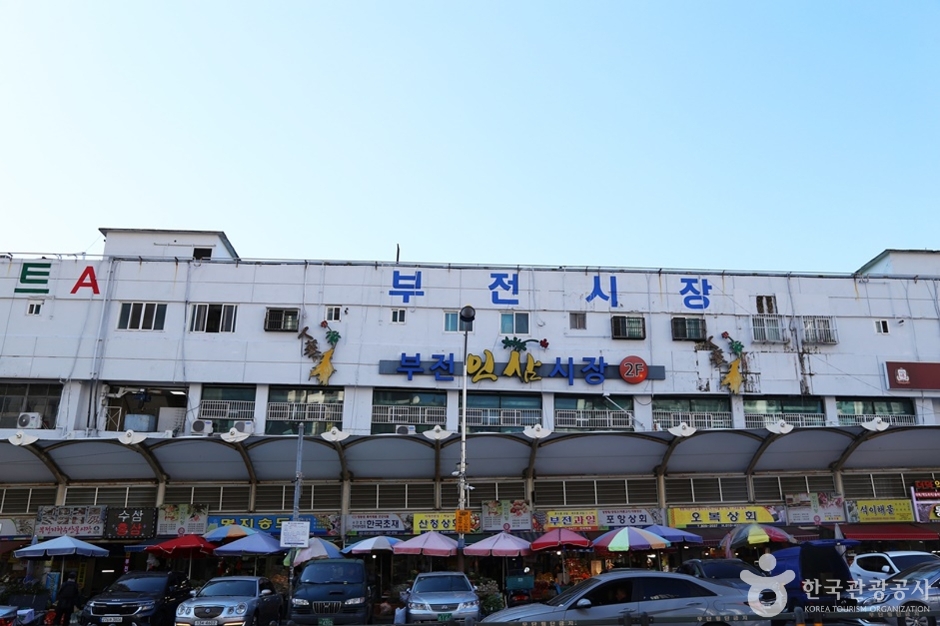
Bujeon Market Town (부전마켓타운): six markets in one
According to the Korea Tourism Organization (KTO), Bujeon Market Town started out as Gijang Alley Market (기장골목시장). After the Korean War, itinerant traders carrying farm and fishery produce from Gijang, Seosaeng, Ilgwang and Wolnae, all on the outskirts of Busan, unpacked and sold near Bujeon Station on the Donghae Nambu Line. Gijang Alley Market became Bujeon Market and then Bujeon Market Town.
KTO names six markets that now make up the complex: Bujeon Sangga, Bujeon Market, Seomyeon General Market, Bujeon Ginseng Market, Bujeon General Arcade and Busan Electronics Arcade. It says the market sells farm and fishery products, meat and daily goods, both wholesale and retail. KTO’s product list mentions seafood, meat, dried fish, clothes, general goods, fruit and vegetables. Its overview says the market is a good place to buy cabbage, radish and seasoning cheaply when the kimchi-making season arrives.
Visit Busan, Busan’s official tourism site, describes the market as a place built by refugees after the war, with fresh seafood and a range of market foods. The site also says locals still use the market’s older name. We cannot judge how much of that is true of any single stall, so treat it as the official description rather than something we tested.
Jeonpo Cafe Street (전포카페거리): from tool shops to cafes
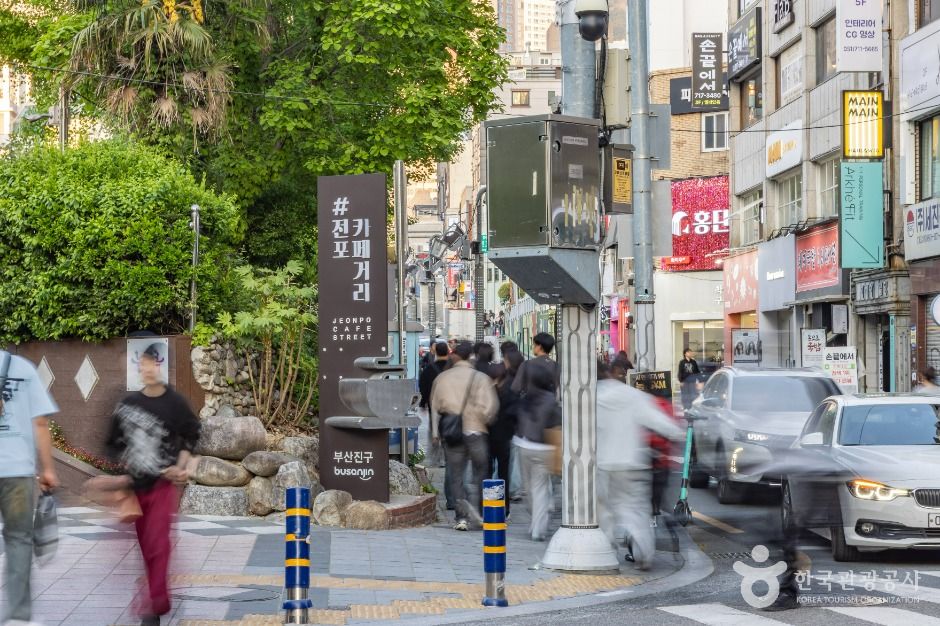
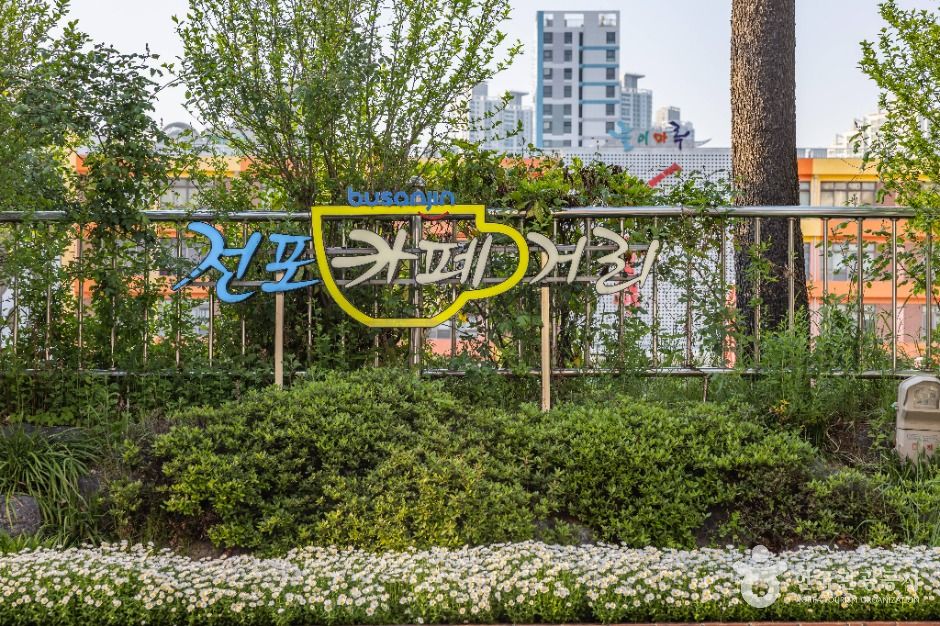
KTO’s Korean-language listing (content ID 1805965; we have not re-fetched it for this revision) says the area of Bujeon-dong and Jeonpo-dong used to be a strip of shops selling tools, hardware and industrial supplies. After 2010, many small cafes moved in, and the street began to be called a cafe street. The same listing says there are about 30 individually styled cafes, most of them small, privately run places, on the side of Seomyeon’s main strip known as Seomyeon 1-beonga. “Roughly 30” is KTO’s figure, not a count we made.
KTO’s English listing gives a fuller picture of what to expect: specialty coffee shops, dessert cafes, bakeries and brunch spots, many set in renovated houses, factories and warehouses. The address is 92 Dongcheon-ro, Busanjin-gu. A separate KTO listing, for Jeonpo Gonggu Street (전포공구길), also describes old tool shops that have been renovated into cafes, restaurants and gift shops, and notes that it is near Seomyeon Station, which it calls Busan’s most crowded area.
How the two feel different (a suggestion)
This part is our own reading, not a sourced fact. A working market is likely to be busy and practical, and a street of independent cafes is likely to suit slower browsing. If you do not have a particular cafe in mind, one simple approach is to walk the street and choose by what looks appealing. We have not named a cafe because our sources do not recommend one.
What to Eat: What We Can and Cannot Say
This is the part of the day where our sourcing is weakest, so here is exactly what is and is not known.
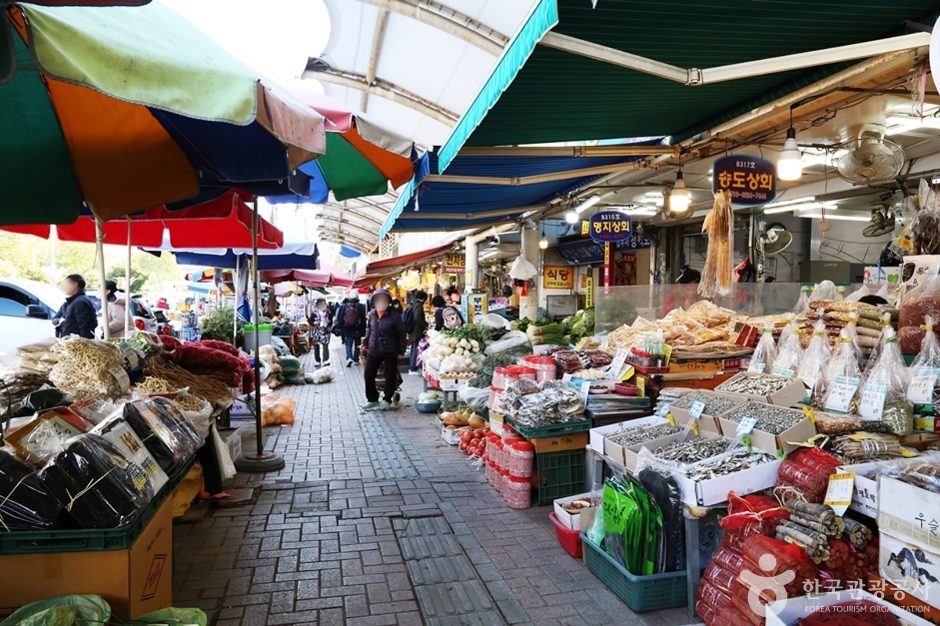
Verified by an official source: Visit Busan describes “fresh seafood” and “a variety of market foods” at Bujeon Market Town. KTO lists seafood, meat, dried fish, fruit and vegetables among the goods for sale. That is the full extent of what the official listings say about food.
From a single travel blog, not an official source: two things to look for are cold raw-fish soup (mulhoe, 물회) and old-style fried chicken (yennal tongdak, 옛날통닭). Both come from one travel blog, bylani.com, which we read in full on 1 October 2026. We could not find either dish in an official source. The blog names shops, but we have not verified any shop, price or opening time, so we do not repeat them. Please read the two items below as things a blogger reported, not as confirmed offerings.
- Mulhoe (물회): the blog describes a cold soup of raw fish in an icy, tangy broth. If you want raw fish, the Korean word is hoe (회).
- Yennal chicken (옛날통닭): the blog describes old-style seasoned fried chicken. We have not verified the shop or the price.
Fish cake skewers (odeng), spicy rice cakes (tteokbokki) and fresh seafood counters are common Korean market snacks, but we found no source for any of them at Bujeon Market Town, so consider them general market food, not confirmed stalls.
One relevant safety point: we cannot vouch for allergen information or for how any dish is prepared. If you have an allergy or a dietary limit, ask the seller directly instead of relying on a dish name.
Plan Your Visit: An Easy Half-Morning
Getting to Bujeon Market Town
Visit Busan says the market is a 3-minute walk from Exit 1 of Bujeon Station on Busan Metro Line 1. KTO also says the market is next to Bujeon Station on Line 1 and next to Bujeon Station on the Donghae high-speed rail line. Visit Busan also lists buses 1, 110-1, 129-1, 141, 31, 33, 62, 77, 87 and 1010, each with a 3-minute walk from the Bujeon Station stop.
Hours, parking and payment
- Hours: KTO and Visit Busan both give 07:00 to 19:00, and both say this varies by shop. Visit Busan lists the market as open Monday to Sunday. KTO says closing days also differ by shop. We have no stall-by-stall schedule.
- Parking: KTO lists parking as available, and Visit Busan names a paid public car park (부전시장 공영주차장). We did not check the prices.
- Phone: the market information line is 051-818-7009 (KTO and Visit Busan agree).
- Payment: KTO’s data field for credit cards reads “없음” (none). Stall practice may differ, so carry cash and ask before you order.
These details were checked on 30 September 2026; the bus numbers, car park and blog wording were re-read on 1 October 2026.
From the market to Jeonpo Cafe Street
The route we suggest is simple: market first, coffee afterwards. Stalls are usually more active earlier in the day, and the cafes suit a later stop (this is our suggestion, not a sourced fact). KTO’s Korean listing places the cafe street opposite Seomyeon 1-beonga, so it is easy to add to a Seomyeon outing rather than making it a separate trip.
The walking time between the two is where we have no sourced figure. Our Instagram posts gave both “about ten minutes” and “15 to 20 minutes”, and no source settles it. The KTO coordinates put the two places about 0.95 kilometres apart in a straight line, which is a rough calculation, not a walking route, so the real walk will be longer than that. Please check the actual route and time on a map app before you set out.
First-time visitor tips
- Start with the market, then the cafes. Our suggestion: the market stalls close at 19:00 at the latest, and individual hours vary, so do the market part first and keep the cafe street for later.
- Carry cash. KTO’s data lists credit cards as none, and we found no source for stall card acceptance, so cash avoids a stalled purchase.
- Treat the food as something to look at, not a checklist. The official sources only mention seafood, meat, dried fish and fruit and vegetables, so see what the stalls actually sell.
- Ask about ingredients. We cannot vouch for allergens, so speak to the seller if you have a dietary limit.
- Do not cross town just for the cafe street. It is easiest to add to a Seomyeon outing.
FAQ
How do I get to Bujeon Market Town?
Visit Busan says it is a short walk from Exit 1 of Bujeon Station on Busan Metro Line 1. Several bus routes also stop near Bujeon Station.
When is the market open?
KTO and Visit Busan both give 07:00 to 19:00, varying by shop. Visit Busan lists it as open every day, but closing days also differ by shop, so we cannot give a stall-by-stall schedule.
Can I pay by card?
That is not confirmed. KTO’s data field for credit cards reads “none”, and stall practice may differ, so bring cash and ask before you order.
How far is Jeonpo Cafe Street from the market?
We have no sourced walking time. The straight-line distance is about 0.95 kilometres, so the real walk will be longer; check a map app.
Which cafe should I choose?
We name none, because our sources do not recommend one. KTO describes roughly 30 independent cafes, so walking the street and choosing by what appeals is a reasonable approach.
What we could not confirm
- The walking time between the market and the cafe street (10 minutes or 15 to 20 minutes; see above).
- Any verified stall or restaurant serving mulhoe, old-style fried chicken, fish cake or tteokbokki at the market, plus prices.
- Whether the two dishes are widely sold at the market. The only support is one travel blog; the official sources are general.
- Menu language and card acceptance stall by stall. We found no source for either.
- Seafood priced by weight or portion. We found no source.
- Parking prices.
- The KTO Korean cafe-street listing (1805965), which we did not re-fetch for this revision.
- Cafe opening hours. KTO lists them as varying by shop, and no individual cafe was checked.
- A named cafe recommendation. We give none.
- Seasonal or holiday closures at either place.
Before You Go
Bujeon Market Town is best treated as a place to look around and pay attention to what the stalls actually sell, without a fixed shopping list. Bring cash, check the day’s hours, and use a map app for the walk to Jeonpo Cafe Street. Add it to a Seomyeon outing rather than crossing town for it, and keep the plan loose enough to change your mind on the day.
We post short first-timer guides on Instagram too: @rolo.koreaguide.
Related guides
- Busan Metro for Visitors
- Where to Leave Luggage in Busan
- Gukje Market and Gukje Market Food Street, Busan
Sources
Checked on 30 Sep 2026; items marked 1 Oct 2026 were re-read that day.
- Korea Tourism Organization, TourAPI (Korean service, detailCommon2): Bujeon Market Town 부전마켓타운 (content ID 132188): history, six markets, products, hours 07:00 to 19:00 varying by shop, information line 051-818-7009, parking available, credit cards listed as none. Coordinates used for the straight-line distance.
- Korea Tourism Organization, TourAPI (Korean service): Jeonpo Cafe Street 전포카페거리 (content ID 1805965): tool-shop history, cafes from 2010, about 30 cafes (not re-fetched for this revision).
- Korea Tourism Organization, TourAPI (English service): Jeonpo Cafe Street (3107897), Jeonpo Gonggu Street (3035570). Photographs from 132188 (KOGL Type 3) and 3107897 (KOGL Type 1), used unaltered.
- Visit Busan (official Busan tourism site), Bujeon Market Town page: https://www.visitbusan.net/kr/index.do?menuCd=DOM_000000201003001000&uc_seq=327&lang_cd=ko : Exit 1 walk of 3 minutes, Monday to Sunday 07:00 to 19:00 varying by shop, paid public car park, bus routes, phone number, and general description of fresh seafood and market food. Re-read 1 Oct 2026.
- Travel blog (not official; mulhoe and old-style fried chicken only), read in full 1 Oct 2026: https://bylani.com/bujeon-market-food/
- Distance: straight-line calculation from the KTO coordinates (about 0.95 km), not a walking route.

