


If you are deciding whether an afternoon visit to Seodaemun Museum of Natural History (서대문자연사박물관) fits your Seoul plans, start with the day you intend to go. The winter listing gives different closing times for weekdays and weekends. That difference changes the last-admission cutoff by one hour, so a single arrival target cannot cover both.
The concrete answer is 16:00 for weekday last admission and 17:00 for weekend last admission, calculated from the listed November–February hours. Plan to arrive before the relevant cutoff. These details come from Korea Tourism Organization information retrieved November 5, 2026, Korea. They are dated planning information, rather than a guarantee for November 29, 2026, or any other visit date.
Choose the closing time first
The listing gives November–February weekday hours of 09:00–17:00 and weekend hours of 09:00–18:00. It also states that last admission is one hour before closing. For a weekday, subtracting one hour from 17:00 gives 16:00. For a weekend, subtracting one hour from 18:00 gives 17:00.
This is the useful distinction when comparing two possible afternoons. If you have been using 17:00 as your winter arrival target, that matches the listed weekend admission cutoff, not the weekday cutoff. Even then, treating the cutoff as your intended arrival time leaves no margin. Choose an earlier arrival target without assuming a particular amount of time inside.
Closing time and last admission answer different questions. Closing time tells you the listed end of the operating day. Last admission tells you the listed latest entry point. Neither tells you how long your own visit should take. Decide how much time you want to allow, then work backward from the applicable times after confirming them.
Check whether the date is an opening day
A weekday or weekend label alone does not establish that the museum will open. The KTO information retrieved November 5, 2026, lists Mondays as closed days, with closure on the following day when Monday is a public holiday. It separately lists January 1 and the days of Seollal, or Lunar New Year’s Day, and Chuseok, or Korean Thanksgiving Day.
Keep that closure check separate from the winter-hours calculation. First identify the weekday or weekend hours that would apply. Then check the exact date against the closure rules. A correct last-admission calculation is useful only after you have established that your chosen date is available for a visit.
The Monday public-holiday exception deserves particular attention when comparing adjacent dates. Do not reduce the supplied wording to “all Mondays are closed” or assume that the next day follows an ordinary pattern. Ask about both the holiday and the following day when either affects your plans. This avoids building an afternoon around an incomplete reading of the closure note.
Confirm the date before committing your afternoon
The supplied KTO listing gives the information-center telephone number as +82-2-330-8899. Use your exact intended date when asking about opening and admission. A specific date is more useful than asking only whether the museum has winter hours, because it lets you address the regular timetable and any closure exception together.
A simple question is: “Could you confirm the opening hours and last admission for my visit date?” If the date falls around a Monday public holiday, add: “Does the following-day closure affect this date?” These are questions to resolve before travelling; this guide does not claim that the answers have already been obtained.
For November 29, 2026, use the same process. The date on your plan does not make a previously retrieved listing a promise of future opening. Confirm the exact date, the relevant closing time, and the admission cutoff together. If you cannot obtain confirmation, keep that uncertainty visible in your itinerary rather than treating the museum as a fixed appointment.
Keep the visit decision focused
The museum is listed at 51 Yeonhui-ro 32-gil, Seodaemun-gu, Seoul. Keep the official English and Korean names with that address when preparing your plan. This gives you a clear destination reference without relying on an invented station exit, an unsupported transport estimate, or a route that has not been established here.
This guide does not provide current admission prices, programme availability, named exhibitions, reservation arrangements, or accessibility assurances. Those details are outside the supported decision here. If one of them determines whether the visit suits you, ask about it directly before making a commitment. A winter timetable cannot answer those separate questions.
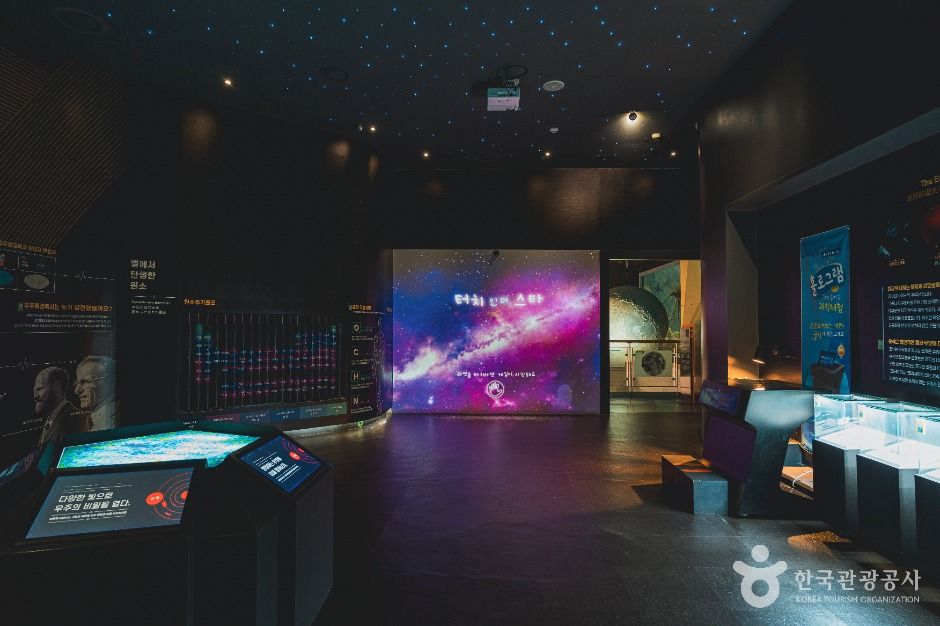
The accompanying photograph is undated. It can illustrate the museum setting, but it cannot establish what will be on display during your visit or confirm current facilities. Keep that distinction in mind when using an image to decide whether a particular exhibition experience is available. The practical recommendation here rests on the dated timetable and its stated limitations.
Your compact winter planning checklist
Before settling on this museum for an afternoon, write down your exact date and whether it uses the listed weekday or weekend winter hours. Note the corresponding closing time and last admission: 17:00 closing with 16:00 last admission on weekdays, or 18:00 closing with 17:00 last admission on weekends. These are the November–February details in the information retrieved in 2026.
Next, check the Monday and public-holiday exception, along with the separately listed holiday closures. Confirm the date and times with the information center, then choose an arrival target before the applicable cutoff. Save this checklist with your destination details so you can revisit the decision if your day changes.
Source: Korea Tourism Organization information, https://english.visitkorea.or.kr/, retrieved November 5, 2026, Korea. The dated listing does not guarantee opening, admission, or hours for a future visit. Photograph: Korea Tourism Organization, KOGL Type 1; undated.

