


Gyeongbokgung Palace and Bukchon Hanok Village sit close together in Jongno-gu, central Seoul, and the Seochon neighborhood to the west has a traditional market and a hanok cafe. Together they make a simple half day for a first visit. This guide puts them in order: what to see, where to eat, and what to check before you leave your hotel.
The facts below come from the Korea Tourism Organization (KTO) listings for each place and from the official English pages named in the sources section. We checked them on 11 October 2026. Where we could not confirm something, we say so.
Where to Go
Gyeongbokgung (경복궁)
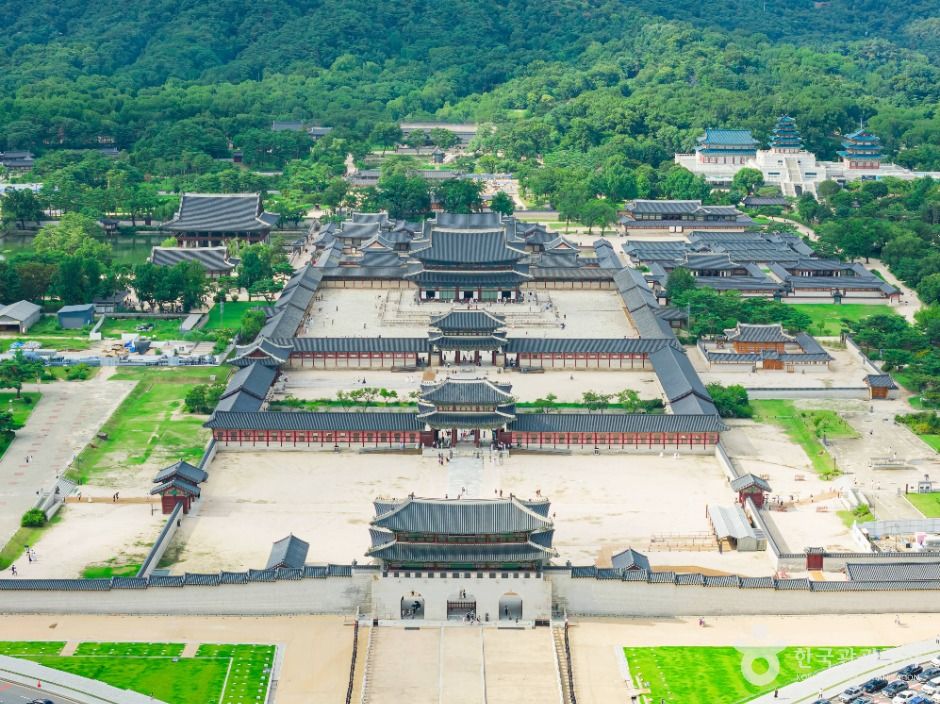
KTO says Gyeongbokgung was founded in 1395 and was the main palace of the Joseon dynasty. It is built against the mountain Baegaksan (also called Bukaksan), with the main gate, Gwanghwamun, opening onto a wide avenue that was once the center of the city. The name carries the meaning of a new dynasty enjoying great blessings.
The palace has a long and difficult history. KTO says it burned in 1592 and was left unrebuilt for more than 270 years, until 1867. It was damaged again after 1910, and restoration work began in earnest in the 1990s. The colonial-era government building that stood in front of the palace was removed between 1995 and 1997, and the Gwanghwamun gate and other buildings were rebuilt.
Two places are worth knowing before you go:
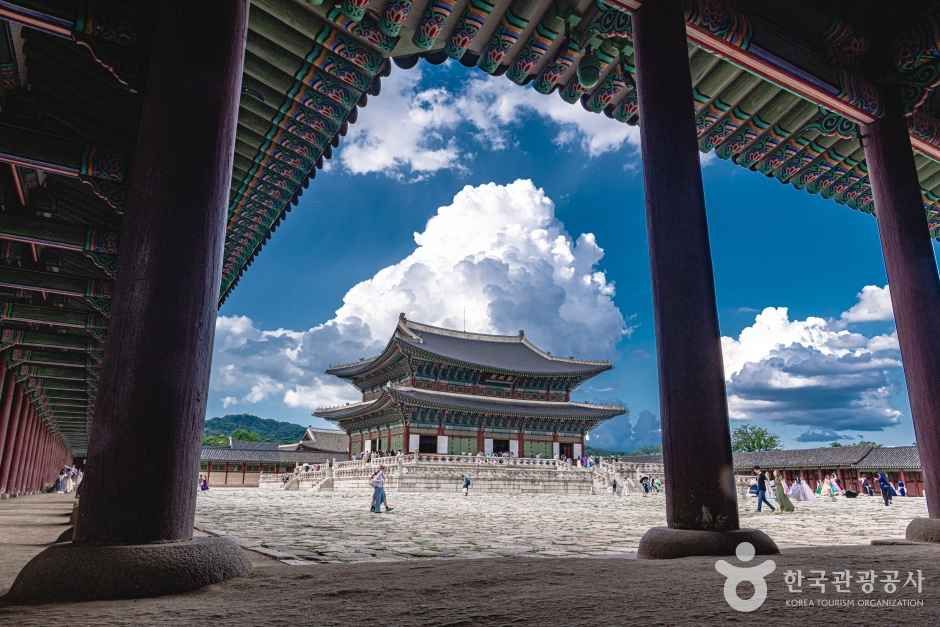
- Geunjeongjeon (근정전). KTO says several Joseon kings, including Sejong, held their enthronement ceremonies here. KTO also says the stone terrace and carved figures of the hall show the sculpture of the period.
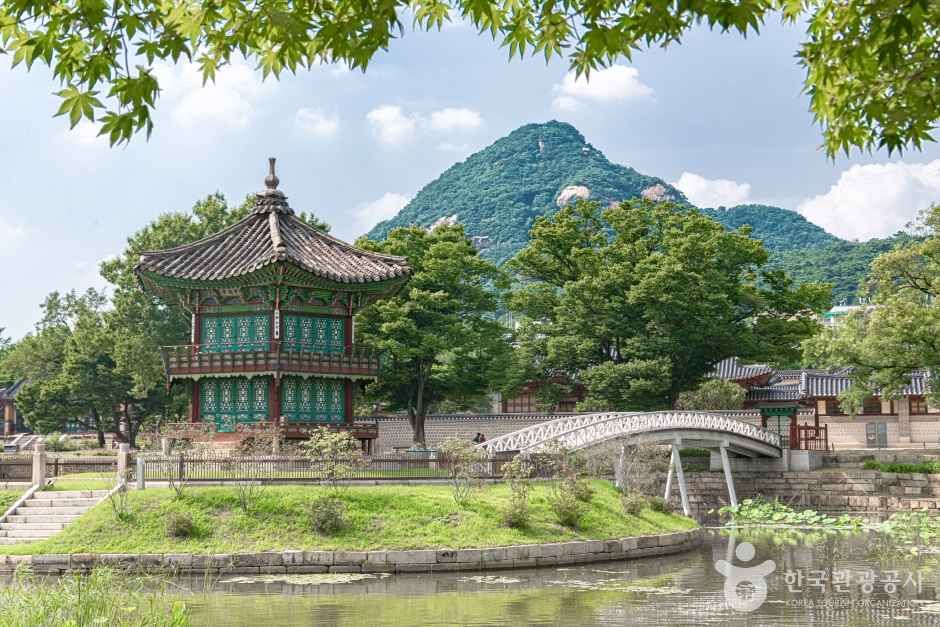
- Gyeonghoeru (경회루) and Hyangwonjeong (향원정). KTO says Gyeonghoeru and the pond of Hyangwonjeong remain in their original form.
KTO also notes two museums on the palace grounds: the National Palace Museum of Korea, west of the Heungnyemun gate, and the National Folk Museum, east of Hyangwonjeong. We did not check their hours or fees.
Bukchon Hanok Village (북촌한옥마을)
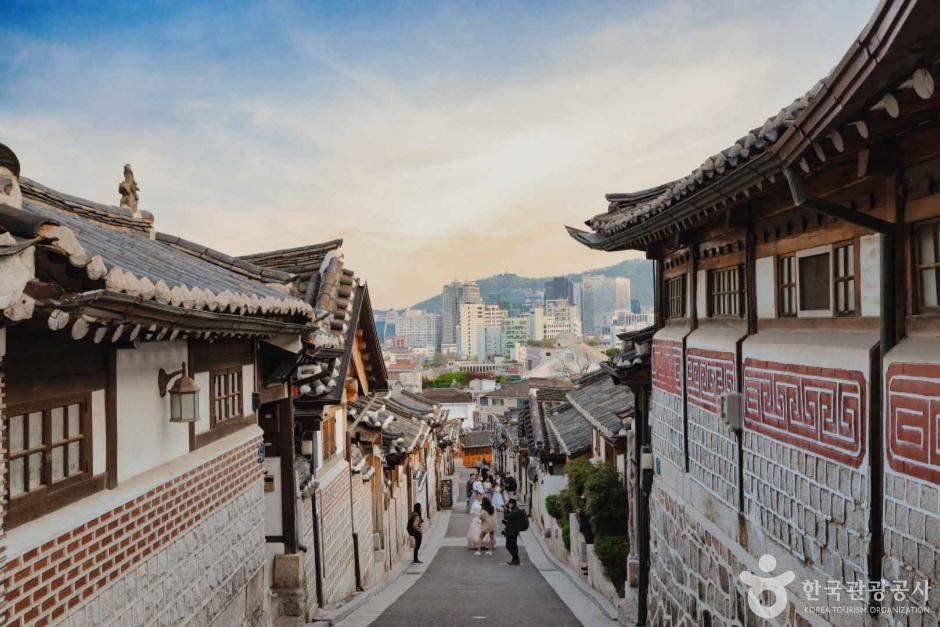
KTO describes Bukchon as a traditional residential area between Gyeongbokgung, Changdeokgung and Jongmyo, with many hanok (traditional Korean houses) packed close together. It says the name means “north village,” from its position north of Cheonggyecheon and Jongno. KTO says the dense hanok districts in Gahoe-dong, Samcheong-dong and Gye-dong took shape in the 1930s, when housing companies built small and medium-sized hanok on large plots.
The straight-line distance from Gyeongbokgung to the Bukchon address in the KTO listing is about 1 kilometer (our estimate from listing coordinates). We did not verify a walking route or walking time, so use a map app.
What to Eat
This part of Jongno has a market and a cafe in the same neighborhood. They are different kinds of stops, so we describe them separately.
Tongin Market (통인시장)
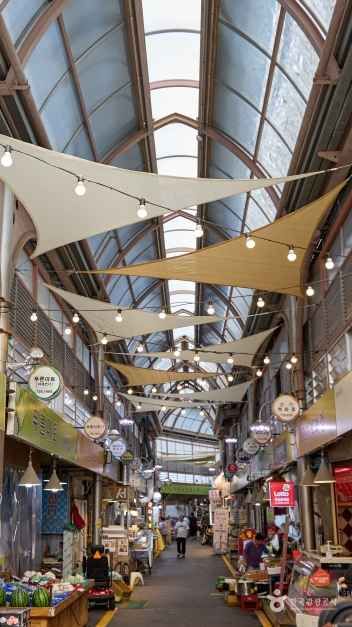
Tongin Market is in Seochon, west of the palace. KTO says it grew from a public market opened in 1941 and now has about 70 shops. Most are food-related, meaning restaurants and side dish shops, followed by sellers of vegetables, fruit, fish and meat, with some general goods and clothing repair shops.
KTO lists the shop hours as 07:00 to 21:00. It lists a lunch box cafe, Dosirak Cafe Tong (도시락카페 통), as open 11:00 to 15:00. KTO says this cafe has been running since January 2012. Closing days differ by shop. There is a restroom, and KTO lists parking as possible.
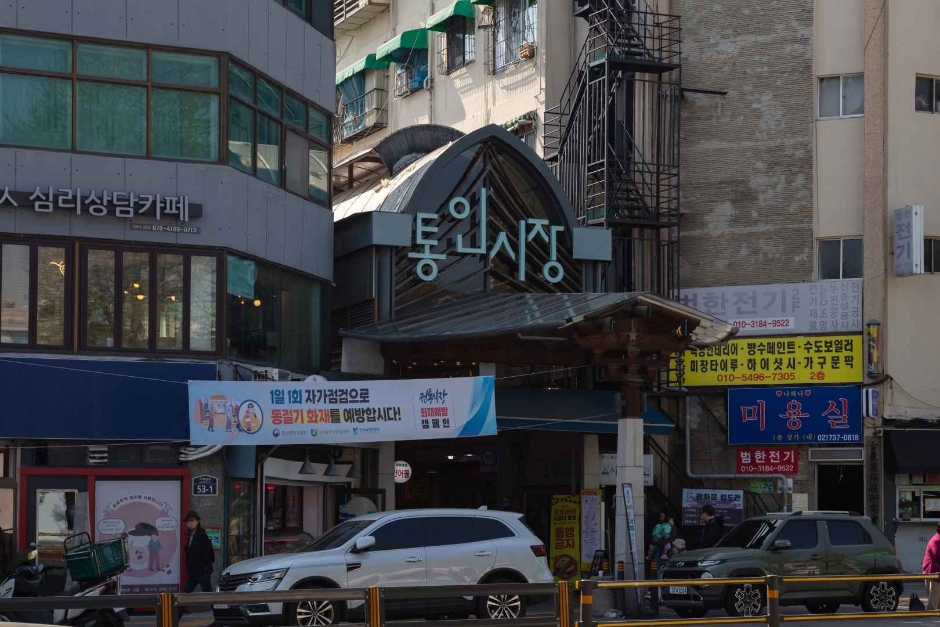
We did not find prices or a menu for the lunch box cafe in our sources, and we did not confirm English menus or card payment. We also do not name individual stalls, because our sources do not.
Naija Sangho (내자상회), a cafe
Naija Sangho is a cafe and shop in a hanok building near Gyeongbokgung Station on Seoul Metro Line 3. KTO says it stands on the site of Naijasi, the office that handled food for the royal court, and that the name comes from that history together with its role as a shop selling lifestyle goods. The glass walls let you look out at the Seochon street.
KTO lists its first menu item as Ssuk-jeolmi Castella (쑥절미 카스테라), and also lists Injeolmi Castella, Naija Monaka (내자 모나카) and Ssuk Latte (쑥라떼). “Ssuk” is mugwort. KTO lists hours of 10:00 to 22:00, open all year, and parking is not possible. The phone number in the listing is 070-7755-0142.
This is a cafe for sweets and drinks, not a restaurant for a full meal. We did not find prices, and we do not know whether the menu has changed since the listing.
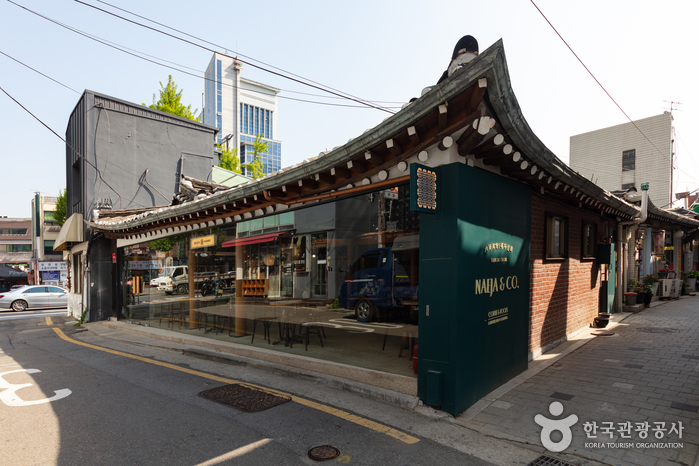
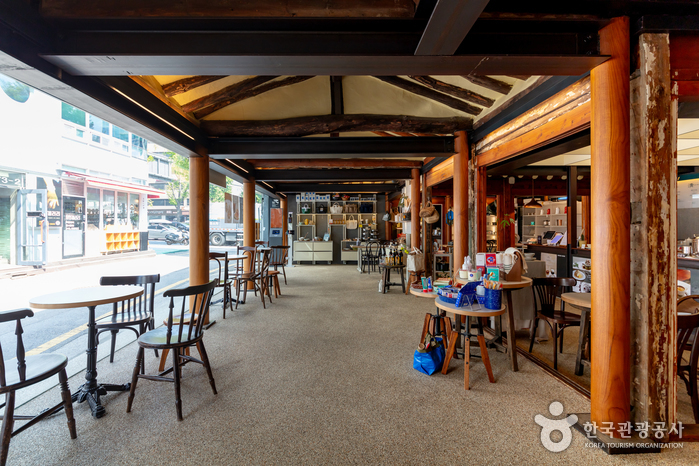
The cafe is about 0.5 kilometer in a straight line from both Tongin Market and Gyeongbokgung (our estimate from listing coordinates). Again, we did not verify walking times.
Plan Your Visit
The closing day
Gyeongbokgung is closed every Tuesday. KTO and Visit Seoul both say so. If a Tuesday falls on a public holiday, Visit Seoul says the palace opens, and KTO’s listing says the closing day moves to the next non-holiday day. Check the date before you plan.
Palace hours and fees
KTO lists these opening hours:
- November to February: 09:00 to 17:00 (last entry 16:00)
- March to May and September to October: 09:00 to 18:00 (last entry 17:00)
- June to August: 09:00 to 18:30 (last entry 17:30)
The adult fee is 3,000 won, according to the KTO English tourism site and Visit Seoul. KTO’s English page says visitors under 19 and over 65 enter free. Visit Seoul says you can enter free if you wear a complete hanbok, and refers to the official guidelines for details. We cover those rules in a separate guide: Wearing Hanbok: Free Palace Entry Rules.
Fees may change. Yonhap News reported on 5 August 2026 that the Korea Heritage Service plans to announce new palace fees in November, to take effect on 1 January 2027. We have not seen the new amounts.
Visit Seoul lists English-language guided tours at 11:00, 13:30 and 15:30 every day except Tuesdays (as of 2026). Check the palace’s official page before you rely on those times.
Bukchon rules
KTO lists Bukchon visiting hours as 10:00 to 17:00. It says the special management area, called the red zone, is closed to visitors from 17:00 to 10:00 the next day. There is no parking. KTO says Bukchon is open all year.
People live in Bukchon. KTO asks visitors to travel quietly. It also asks that:
- groups visit with a guide;
- tour buses do not park illegally;
- visitors do not trespass, take photos without permission, litter or make noise;
- visitors keep to the visiting hours.
A suggested order
This is our suggestion, not a sourced schedule. See the palace first, during its opening hours, then walk to Bukchon and be there before 17:00. Have lunch in Seochon after the palace or after Bukchon, depending on which way you are heading. The lunch box cafe at Tongin Market closes at 15:00, so plan that stop around it. Because we have no verified walking times, leave extra time between stops.
FAQ
Is Gyeongbokgung open on Tuesday? No. It is closed every Tuesday.
What time must I leave Bukchon? KTO lists visiting hours of 10:00 to 17:00 and says the red zone is closed to visitors outside those hours.
Is Naija Sangho a restaurant? No. KTO lists it as a cafe, and its menu items are sweets and drinks.
Can I park at the palace or Bukchon? KTO lists palace parking as possible (240 cars and 50 buses) and Bukchon parking as not possible. We did not check parking fees.
What We Could Not Confirm
- Walking times between the palace, Bukchon, Tongin Market and Naija Sangho.
- Prices and menus at Tongin Market’s lunch box cafe and at Naija Sangho.
- English menus and card payment at either place.
- Queues, crowd levels and the best time of day for any of the sites.
- Hours and fees of the museums inside the palace.
- The new palace fees planned for 2027.
Related guides
We post short first-timer guides on Instagram too: @rolo.koreaguide.
Sources
Checked on 11 Oct 2026.
- Korea Tourism Organization, TourAPI (Korean service): Gyeongbokgung (content ID 126508), Bukchon Hanok Village (126537), Tongin Market (1590323), Naija Sangho (2717547). Photographs from these listings, used unaltered: KOGL Type 1 for Gyeongbokgung and Tongin Market, KOGL Type 3 for Bukchon and Naija Sangho.
- Korea Tourism Organization, Visit Korea English page, Gyeongbokgung Palace: https://english.visitkorea.or.kr/svc/contents/contentsView.do?vcontsId=87740 (hours, closing day, adult fee; no update date shown).
- Visit Seoul (Seoul Tourism Organization), Gyeongbokgung: https://english.visitseoul.net/attractions/Gyeongbokgung/ENP000072 (hanbok entry, English tour times; marked as of 2026).
- Yonhap News via Daum, 5 Aug 2026, palace fee plan (reporting an announcement by the Korea Heritage Service): https://v.daum.net/v/20260805160024288 .
- Distances: straight-line calculation from the KTO listing coordinates, not a walking route.

