


There is no single best month to visit Busan. It depends on whether you want beaches, long walks, or quiet sightseeing. This guide collects what Busan’s official sources say about each season, and it points out where they disagree.
Every figure below comes from a named official page that we opened on 30 September 2026. None of those pages states which years its averages cover, so we cannot call them climate normals, and we say so where it matters. We also could not open the Korea Meteorological Administration’s (KMA) climate statistics for Busan, so this guide does not use them.
The Big Picture
Visit Busan describes the city as having a maritime climate, “cool in the summer and warm in the winter” because it borders the ocean. It gives average temperatures spanning from 0 °C to 29 °C, with extremes rarely dropping below -5 °C or exceeding 32 °C.
The Busan city government’s “Four Seasons” page explains that, after Jeju Island, Busan has the mildest winter in Korea. It says the daily minimum falls below 0 °C on 53 days a year, the second-lowest count in Korea.
Season by Season
Two official pages give seasonal averages, and they do not match. We show both rather than pick one.
- Spring: the Busan city page gives 14.9 °C (early March to late June); Visit Busan gives 13.3 °C (March to May).
- Summer: the city page gives a July average of 23.9 °C (end of June to early September); Visit Busan gives 23.6 °C (June to August).
- Autumn: the city page gives 21.8 °C for September and 17 °C for October (early September to late November); Visit Busan gives 17.2 °C (September to November).
- Winter: the city page gives 3.8 °C (end of November to end of February); Visit Busan gives 4.7 °C (December to February).
The two pages define the seasons differently, which likely explains part of the gap (for example, the city page starts spring in early March and ends it in late June). Neither page says which years the figures cover.
Spring
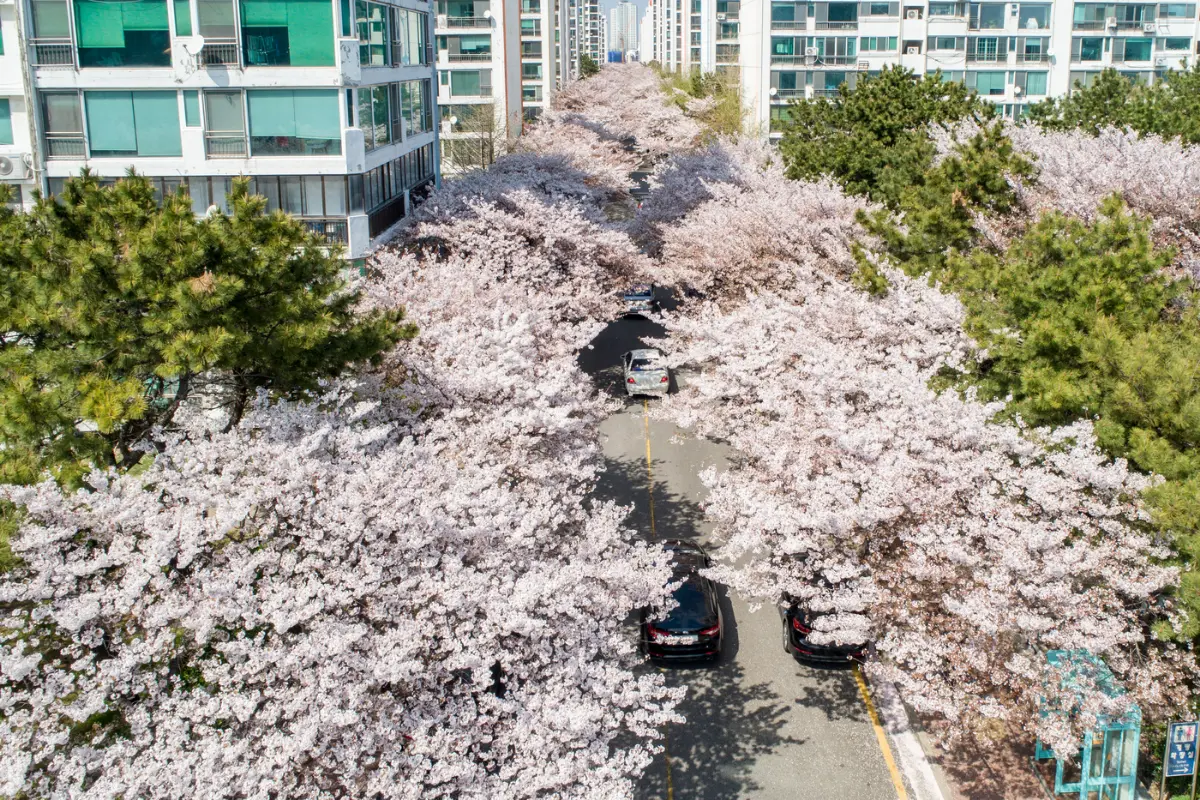
The Busan city page describes apricot flowers and dandelions beginning to bloom in late March, and peach blossoms in April. It gives an average spring wind speed of 4.4 m/s. Visit Busan says it is warm when the wind blows from the southwest and chilly when it blows from the northeast.
Summer
The city page says the rainy season runs from late June to early August and accounts for 50 to 60 per cent of yearly precipitation. It puts peak temperatures at 32 °C from late July to mid-August, with night-time readings around 25 °C. Visit Busan says localised torrential downpours are frequent and conditions stay humid and hot after the rainy season ends.
If your main aim is the beach, VisitKorea (KTO) notes over 270 beaches nationwide in its seasonal advice, which is a national figure, not specific to Busan.
Autumn
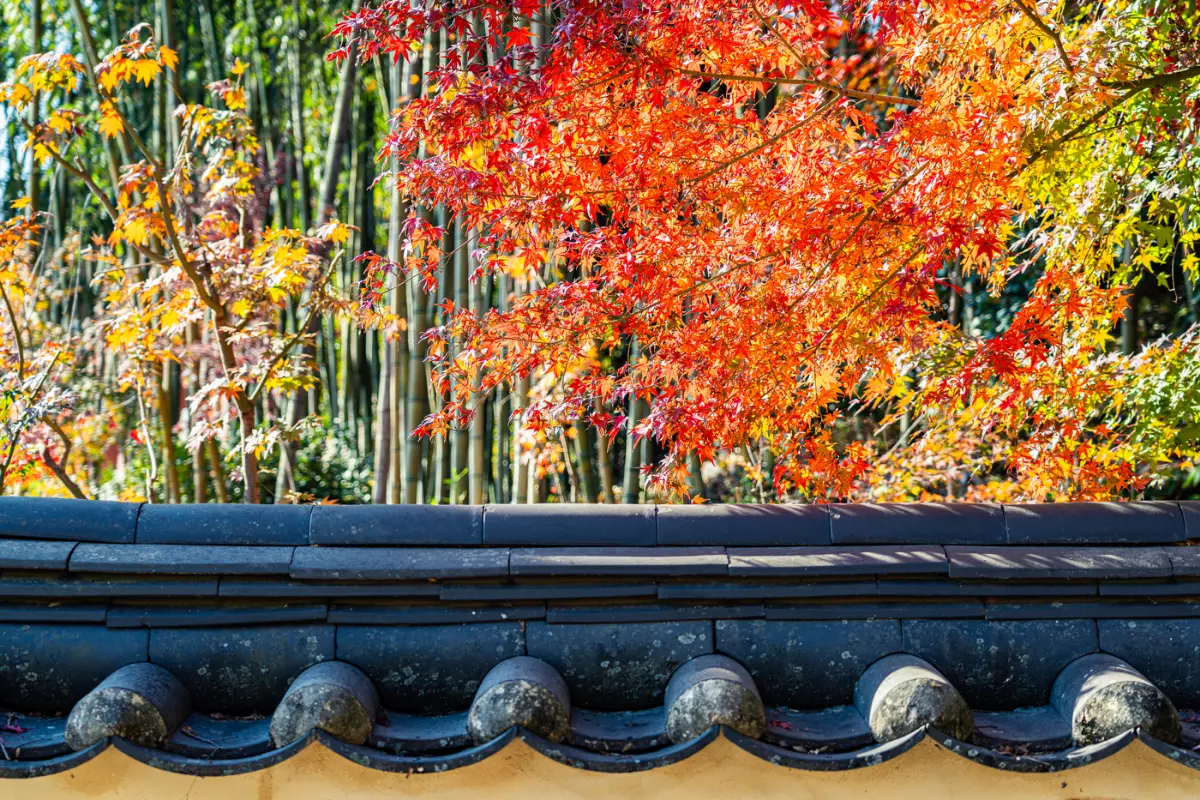
The city page says continental high pressure brings clear weather from early September, and that colder north-westerly winds cause temperatures to drop sharply from November onward. Visit Busan describes autumn as tending to be sunny, with large differences between day and night, and warns that typhoons may occur in this period. It does not say how many, or how likely.
Winter
Visit Busan describes winter as cold and dry with strong winds. The city page reports the average winter temperature of 3.8 °C given above.
Monthly Temperatures on VisitKorea
KTO’s VisitKorea climate page lists highest and lowest average monthly temperatures for Busan. The page does not state the years covered. Its monthly figures for the highest averages run from 8.2 °C in January to 29.5 °C in August. The lowest averages run from -0.1 °C in January to 23.7 °C in August. A few points along the way: April is 18.2 °C at its highest and 10.1 °C at its lowest; October is 22.5 °C and 14.5 °C; December is 10.4 °C and 2 °C. The page was last updated on 21 August 2025.
Which Season for Which Trip?
The official advice is short. VisitKorea recommends spring (March to May) and autumn (September to November) for travelling on foot, because the temperature is moderate. This is guidance from the sources, and the choice is yours.
Two suggestions that follow from the figures and are ours, not the sources’: if you dislike rain, the late June to early August window is the one to look at, since the city page says it brings 50 to 60 per cent of the year’s precipitation. If you are travelling in autumn, keep an eye on the forecast, since typhoons may occur.
Events
Visit Busan’s festival page lists many events, with some in 2025 and one in 2026. We did not find a consistent, current year-by-year calendar, so we do not give dates. The page mentions, for example, the Busan International Film Festival (September, at Busan Cinema Center in Centum City and BIFF Square in Nampo-dong), the Busan Fireworks Festival (autumn, Gwangalli Beach), the Busan International Rock Festival (July, Samnak Eco Park) and the Dongnae-eupseong History Festival (autumn, Dongnae area). Confirm this year’s dates on Visit Busan before planning around any of them.
First-time visitor tips
- Start with what you want to do. The official advice names spring and autumn for walking, because the temperature is moderate. If your plan is mostly on foot, our suggestion is to look at those months first.
- Do not trust a single average. The two official pages give different seasonal figures and neither says which years it covers. Use them as a rough guide only.
- Pack for wind and for rain. Visit Busan mentions chilly northeast winds in spring and strong winds in winter, and the city page puts the rainy season from late June to early August.
- Check the forecast in autumn. Typhoons may occur then, though we could not find how often.
- Do not plan around a festival yet. The listing mixes years, so confirm the dates for the year you travel.
FAQ
Is there one best month to visit Busan?
The sources do not name one. Spring and autumn are recommended for travelling on foot, and the right month depends on whether you want beaches, walks or quiet sightseeing.
Is Busan very cold in winter?
The city page says it has the mildest winter in Korea after Jeju Island, with the daily minimum below 0 °C on 53 days a year. Visit Busan still describes winter as cold and dry with strong winds.
When is the rainy season?
The city page says it runs from late June to early August and brings 50 to 60 per cent of yearly precipitation. We could not find rainfall by month.
How reliable are the temperatures in this guide?
They are rough. The two official pages disagree on every season, and neither states the years covered. We also could not open the Korea Meteorological Administration data.
Are there typhoons?
Visit Busan warns that typhoons may occur in autumn. It does not say how many or how likely they are, so watch the forecast before you travel.
What We Could Not Confirm
- KMA climate normals for Busan (for example, 1991-2020). We could not open a page with the data.
- The years covered by every average quoted above.
- Rainfall by month, and how many typhoons affect the city in a typical year.
- This year’s festival dates. The listing mixes years.
- Why the two averages differ. The pages do not explain it.
Before You Go
Pick your season by what you want to do, check the forecast a few days ahead, and treat the averages here as a rough guide only. For a quick card version of this guide, follow @rolo.koreaguide on Instagram.
Related guides
Sources
All checked 30 Sep 2026.
- Busan Metropolitan City, “About Busan > Four Seasons”: https://www.busan.go.kr/eng/four-seasons
- Visit Busan, “Preparing for a Trip” (climate and weather): https://www.visitbusan.net/en/index.do?menuCd=DOM_000000304011004000
- VisitKorea (KTO), Climate (page last updated 21 Aug 2025): https://english.visitkorea.or.kr/svc/contents/infoBscView.do?vcontsId=140636
- Visit Busan, Festivals listing: https://www.visitbusan.net/index.do?menuCd=DOM_000000301005000000
- Photos, Visit Busan Tourism Archive (KOGL Type 1, checked 1 Oct 2026): https://www.visitbusan.net/archive/dataSearch/view.nm?dataSid=METADATA004836&menuCd=36 (Namcheon-dong cherry blossom road) and https://www.visitbusan.net/archive/dataSearch/view.nm?dataSid=METADATA010183&menuCd=36 (Beomeosa)

