


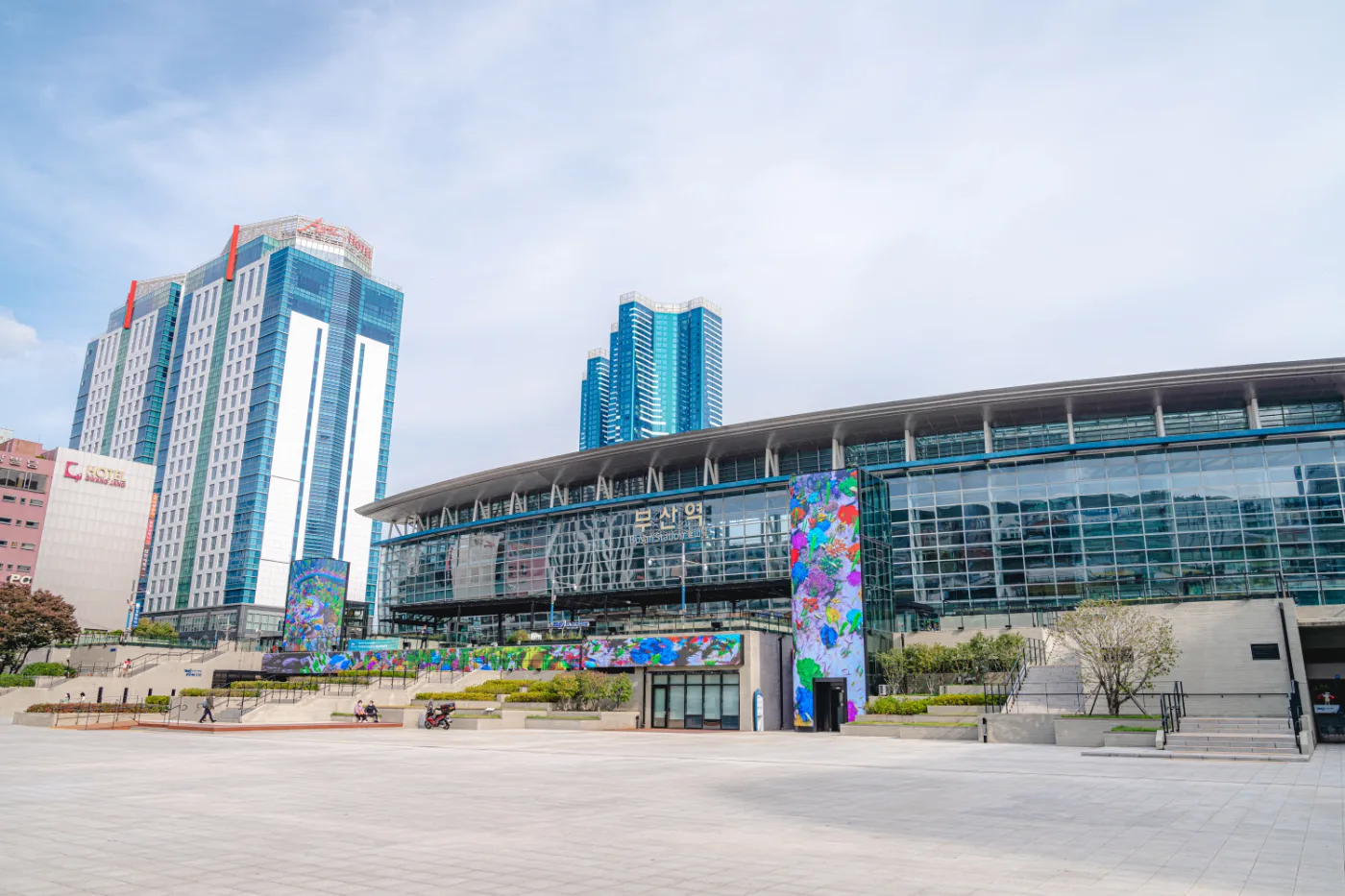
Busan is spread along the coast, so planning your transport helps (our view). You will probably arrive by plane at Gimhae Airport or by KTX at Busan Station, then use the metro for most trips. A few places need a train on the Donghae Line or a bus.
This guide puts our transport guides in one place. It explains what each mode is for, compares them in a table and suggests what to buy at each stage. We keep every fare and time as the guide gives it, with its caveats.
Quick answer – By air: Gimhae Airport has a light rail, two limousine bus routes and taxis. The limousine accepts credit cards only. – By train: The KTX from Seoul ends at Busan Station, in the middle of the city. – In the city: Busan Metro is the main tool. A card or mobile ticket is 100 won cheaper per adult trip than a QR ticket. – To the east coast: The Donghae Line. The mobile metro passes are not valid on it. – Fares and times change. Check the operator before you travel.
Arriving at Gimhae Airport
The airport lists four ground options. Our Gimhae Airport to Busan guide covers each of them, based on the airport operator, the Busan Transportation Corporation and Visit Busan.

The light rail has its own airport station and links to Busan Metro at Sasang (Line 2) and Daejeo (Line 3). The operator lists adult traffic-card fares of 1,300 to 1,500 won depending on section. The operator’s page gives 05:00 to 24:00 for the line. We could not confirm the airport-to-Sasang travel time, so use a route planner.
The airport lists two limousine routes. The route to Seomyeon and Bujeon costs 6,000 won, and the route to Haeundae and Gijang costs 9,500 won. Both list “Only credit card”, so do not count on cash. Neither route stops at Busan Station. The Haeundae timetable is uneven, with a long gap after the morning slots, so check it first.
Taxi estimates from the airport are 18,000 won (standard) to Seomyeon in 45 minutes, 25,000 won to Haeundae in 70 minutes and 28,000 won to Taejongdae in 80 minutes. These are the airport’s estimates, not quotes, and night surcharges apply. The free airport shuttle only goes to the P3 long-term parking lot and does not go into the city.
Arriving by KTX from Seoul
Our KTX guide says the Gyeongbu Line is 447.1 km long and that the KTX has a top speed of 330 km/h. A Seoul to Busan KTX ends at Busan Station, which the Korea Tourism Organization (KTO) calls the central station of the city.
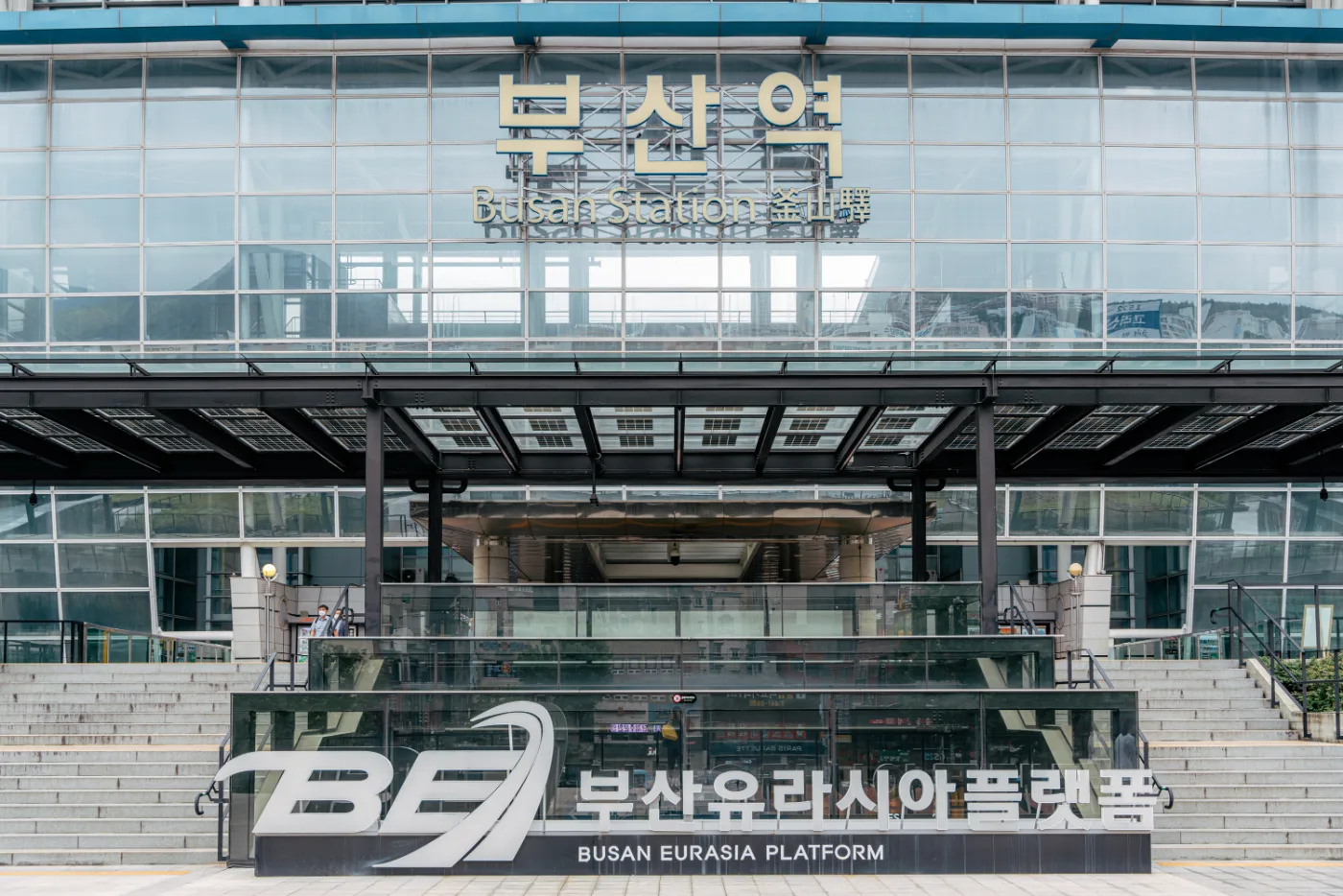
KTO says the KTX leaves from Seoul, Yongsan and Cheongnyangni stations, but it does not say which one each Busan-bound train uses. Read the departure station on your ticket. The SRT is a separate service from Suseo Station, and the Korail Pass does not cover it.
KTO says tickets can usually be bought from one month before departure at 07:00, up to 20 minutes before departure. You can buy at a ticket office, the KORAIL website, the KORAIL+ app, a kiosk, NAVER Train Booking or KakaoT. We could not confirm the journey time, fares or Korail Pass prices, so check Korail. The Korail Customer Center, English only, is +82-1599-7777, daily 08:00 to 20:00.
Using the Busan Metro
Most visitors will rely on the metro. Our metro and T-money guide lists three ways to pay: a single-use QR ticket from a station machine, a transport card, or a mobile ticket.

The operator lists adult section 1 at 1,600 won with a card or mobile ticket and 1,700 won with a QR ticket. Section 2 is 1,800 won and 1,900 won. With a Hanaro, Mybi, eb, T-money or Cashbee card you can transfer between rail and buses within 30 minutes. The fare is based on the highest fare among the services used.
If you already own a T-money card, check it first, because the operator lists T-money as eligible for transfer discounts. We found no official price for a new card, so we do not state one. The mobile passes are 6,000 won for 1 day, 13,000 won for 3 days and 45,000 won for 30 days (up to 45 trips). The operator says they are valid only on the urban railway, and Visit Busan adds that they are not valid on the Donghae Line or the light rail.
Visit Busan says Lines 1 to 4, the light rail and the Donghae Line run from 05:00 to 23:59 (the operator’s light rail page says 24:00). Last-train times vary by station, so check yours before you plan a late evening.
Going East on the Donghae Line
The Donghae Line carries you from central Busan up the east coast. Our Donghae Line guide uses Visit Busan’s five recommended stops: Bujeon, Allak, Songjeong, Gijang and Ilgwang. A 2022 city notice gives 76 minutes one way from Bujeon to Taehwagang station in Ulsan. We could not confirm today’s fares or timetable.
This line leads to places such as Songjeong Beach, where Visit Busan gives a 17 to 20 minute walk from Songjeong Station. It also reaches Chilam Port and Ilgwang Beach, by way of Jwacheon or Ilgwang stations. Both guides repeat the pass warning. Our guides confirm only that the mobile passes are not valid there. We could not confirm how cards or tickets work on this line.
The Busan City Tour Bus
Our city tour bus guide describes three regular loops from Busan Station: Red, Green and Orange. The operator lists the service as closed on Mondays and Tuesdays.
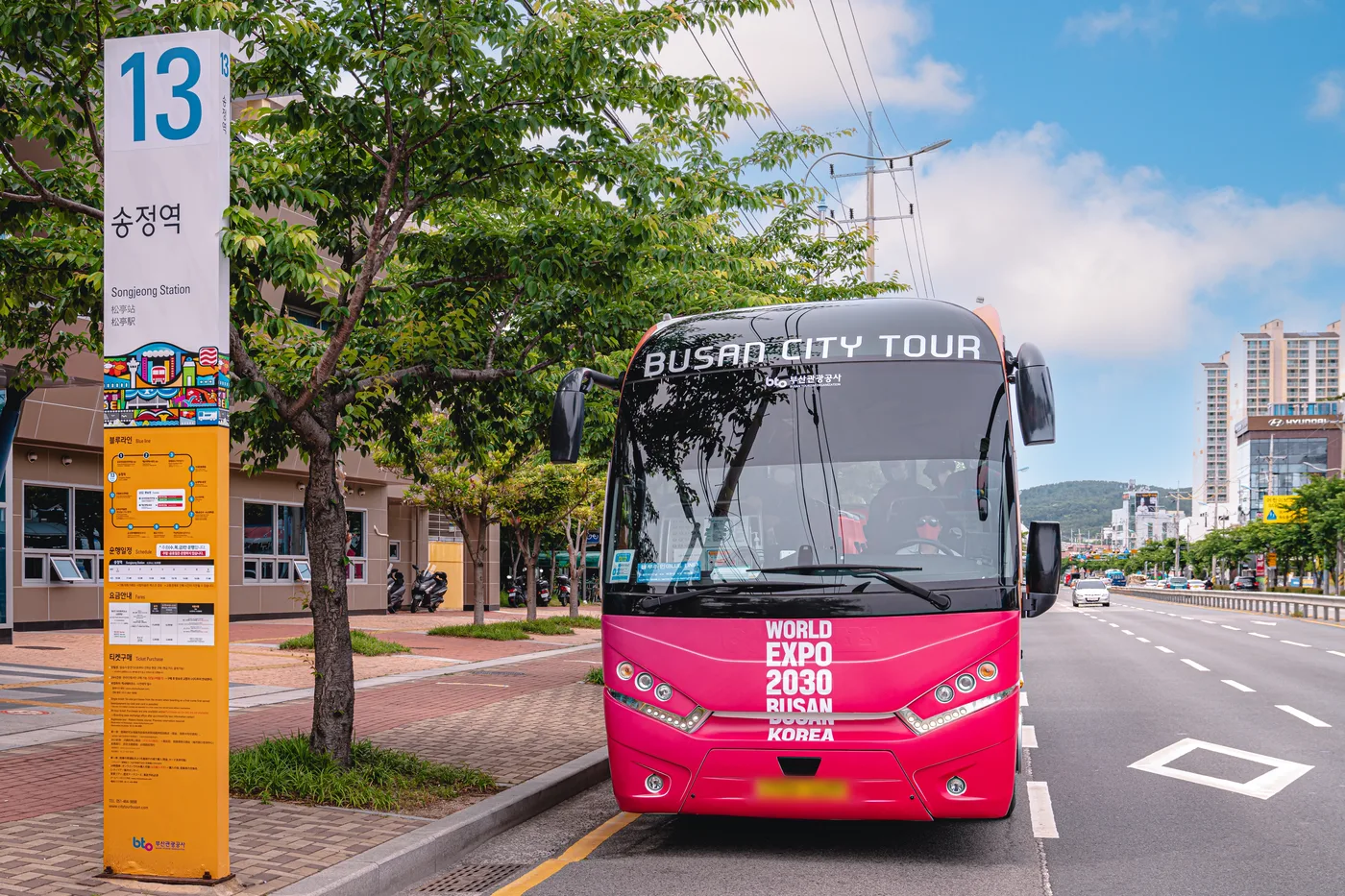
The Red Line’s first bus leaves Busan Station at 09:45 and the ninth and last at 16:35. The Orange Line takes 2 hours 10 minutes. The operator’s own pages give two different day-pass prices, 20,000 won and 15,000 won for adults, so we cannot say which is current. We have not compared the bus with the metro, so we make no claim about which is better for you.
Bags, Help Desks and Information
If you land or check out with time to spare, our luggage storage guide lists Metro lockers by line. On Line 1, a small locker is 2,000 won and an extra large one is 6,000 won. Line 2 charges more at weekends. The page lists lockers at Busan Station, Seomyeon, Nampo, Haeundae, Centum City and Gwangan. It lists none at the airport and we could not confirm storage there.
For maps and route help, the tourist information centers guide lists centers at both Gimhae Airport terminals and on the 2nd floor of Busan Station. All three are open 09:00 to 18:00. Visit Busan also lists a Busan Travel Hotline, 1330 or 051-120, on weekdays. We have not tested it from abroad.
Compare the Options
| Option | Best for | Listed cost | Main caveat | |—|—|—|—| | Light rail from the airport | A budget route with a metro transfer | 1,300 to 1,500 won (adult, traffic card) | Airport-to-Sasang time unconfirmed | | Airport limousine | Seomyeon, Bujeon or Haeundae hotels | 6,000 or 9,500 won | Credit card only; no Busan Station stop | | Airport taxi | Heavy bags or a late arrival | 18,000 won (Seomyeon) and 28,000 won (Taejongdae), airport estimates | Estimates only; surcharges at night | | KTX | Seoul to central Busan | Not confirmed | Check your departure station | | Metro | Most city trips | 1,600 won (card, section 1) | QR ticket costs 100 won more | | Donghae Line | Songjeong, Gijang, Ilgwang | Not confirmed today | Mobile passes not valid | | City tour bus | Loops from Busan Station | 15,000 or 20,000 won, sources differ | Closed Mondays and Tuesdays |
First-Timer Tips: What to Buy and When
These choices are our suggestions, not official advice.
| When | What to do | Why | |—|—|—| | Before you leave home | Book a KTX seat if you need one | KTO says tickets can usually be bought from one month ahead | | On arrival | Pick the airport route that matches your hotel area | The limousine serves Seomyeon and Haeundae, not Busan Station | | First metro ride | Check any T-money card you own before buying a new one | The operator lists T-money for transfers | | One-off ride | Use a QR ticket from the station machine | No card needed | | East coast day | Do not rely on a mobile pass; check how to pay at the station | Passes are not valid on the Donghae Line, and card use there is unconfirmed | | Last day | Plan to get back any leftover card balance early | The fees differ by where you go |
FAQ
Which is the cheapest way from the airport? Visit Busan calls the light rail with a metro transfer the cheapest way to downtown. Check the fare and a route planner for your hotel.
Can I pay cash on the airport limousine? The airport lists credit card only, so do not count on cash.
Does the KTX go to central Busan? Yes. It ends at Busan Station, which KTO describes as the central station.
Do I need a card for the metro? No. A QR ticket works at any station, but a card is 100 won cheaper per adult trip.
Is there a bus from the airport to Busan Station? Not among the routes the airport lists.
What We Could Not Confirm
- The airport-to-Sasang light rail time and exact fare.
- The KTX journey time, fares, luggage rules and Korail Pass prices.
- Which Seoul station each Busan-bound KTX uses.
- The price of a new transport card.
- Today’s Donghae Line fares and timetable.
- The current city tour bus day-pass price.
- Luggage storage at the airport.
- Last-train times for your station.
How We Made This Guide
This hub combines our checked transport guides. Those guides were checked between 30 September and 2 October 2026, and this hub was assembled on 3 October 2026. Plan choices and the “what to buy” table are our suggestions. For short visual guides, follow us on Instagram: @rolo.koreaguide.
Related guides
- 3 Days in Busan: A First-Timer Itinerary
- Busan’s Beaches and Coast
- Where to Eat in Busan: Markets and Local Food
- Best Time to Visit Busan
Sources
The underlying guides were checked 30 Sep to 2 Oct 2026; this hub was assembled on 3 Oct 2026 without re-checking the official sources. Facts come from our own guides, which cite Gimhae International Airport, the Busan Transportation Corporation, Korail, KTO (VisitKorea), Visit Busan, the Busan city notice on the Donghae Line and the Busan City Tour operator. Photographs: Busan Metropolitan City and Busan Tourism Organization (KOGL Type 1). Diagrams: Day in Korea (not photographs).